STEP 4 - THE LEAVES START TO GROW Part a) Share your expert findings -> SHARE: Before your design team can make collective decisions on a garden design, you must have first shared your own research with your group. After all, you are an expert on important things now. |  |
Click here to return to the details about sharing your individual research.
It’s important to remember to be positive and supportive of all your team members.
Ask questions and share your growing knowledge on the Growth Wall …
Part b) Group Design
Based on the findings presented by each member of the group, it is now time for your Design Team to collectively design a sustainable indigenous garden to present to the whole class.
-> WORDS:
Now that you have all presented your individual research, as a group, you will need to create a word cloud (using Wordle, if you like) or mindmap to highlight and link the key findings you have each discovered. This will help kickstart your garden design …
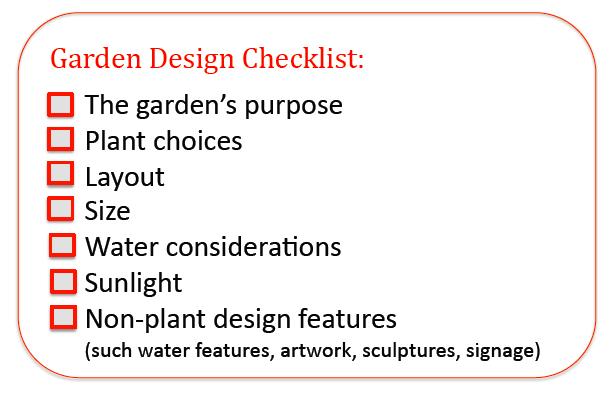
Now that you’re all experts, let’s learn about how to design a garden …
1) Get out of the classroom!
Make sure you’ve got your hat on, sunscreen applied and notepad ready. Don’t forget your pen. It’s time to get your hands dirty. Well, sort of.
You will need to go out into the yard with your groups to where your teacher has specified the garden will be.
That’s right, walk away from the computer and go out into the fresh air. It’s good for you, you know?
O
When you’re out in the yard, use this questionnaire to help the early stages of your design plan: (click here to download a printable version)
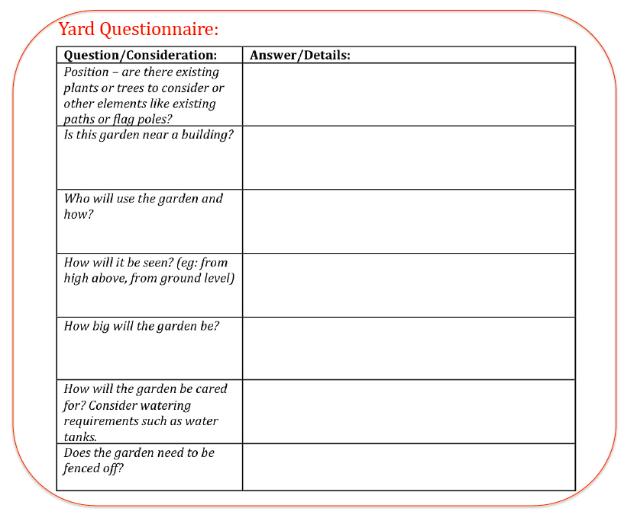
Don’t forget to come back into the classroom so you can discuss what you found out.
-> IMAGINE:
As a group, create a Y-Chart to help you imagine your garden. Click here to download an example of a Y-Chart. You will see it has the following prompts to guide you: Looks Like (eg: leafy, vibrant), Sounds Like (eg: peaceful, quiet) and Feels Like (eg: smooth, bumpy).
2) Start designing!
The following resources may help you when designing your garden:
- Garden planning and designing advice – from Channel 7’s Better Homes and Gardens TV program (garden design graph paper and symbols can be downloaded as PDFs from this page):
http://au.lifestyle.yahoo.com/better-homes-gardens/article/-/5832201/diy-garden-design-kit/
- This site offers great advice and gives you plenty to think about what you need to consider when designing a garden – from Global Garden (an online magazine):
- This site helps you locate what native plants are appropriate to grow where to live, plus will help you attract wildlife – from the Nursery and Garden Industry:
- Sustainable Garden Design Principles (includes principles, how to get started, plant selection and design) – from Sustainable Gardening Australia (not-for-profit, non-government organisation):
- Things to consider when planning an indigenous garden - from the Balcombe Estuary Rehabilitation Group Inc:
- Native Australian Plants Guide (including descriptions, photos, instructions on how to grow plants) – from Australian Native Plants Society:
- Aboriginal Plant Use – from Australian National Botanic Gardens Education Services (Click on the individual plant name to display more information):
http://www.anbg.gov.au/gardens/visiting/exploring/walks/aborig.
- Reasons for choosing indigenous plants and considerations for designing gardens. Also includes plant names, descriptions and growing conditions (under “Catalogue”) – from Victorian Indigenous Nurseries Co-operative (VINC):
- Some information on the benefits and details of school garden project - profiled by the ABC’s Gardening Australia TV program:
Important to note: many native plants used by Aboriginal peoples contain toxins for which they had developed preparation techniques to neutralise their effects.
-> SHARE:
The design will be shared with the class in the following three ways: in writing, visually and orally.
Click here for more details on the presentation requirements (Step 5).
